
From Book to Bite: Leveraging Secret Kitchens of Samar for Culinary Tourism and Global Taste Recognition
I. Introduction
In June 2025, the international spotlight briefly turned to Samar Island when Secret Kitchens of Samar earned two of the highest honors at the Gourmand World Cookbook Awards in Lisbon—Best Regional Book in the World and Best Book Series in the World. The recognition celebrates Samar’s rich culinary heritage and the deeply rooted stories behind its traditional dishes—narratives shaped by family rituals, local ingredients, and generations of lived experience. Yet beyond cultural affirmation, this award offers a more strategic opportunity: the chance to reframe Samar’s overlooked identity not as a barrier to growth, but as a foundation for it.
 In a world searching for meaningful, place-based tourism and
authentic cultural encounters, Samar possesses something rare—a story
already told and a culture already alive, simply awaiting activation. The
cookbook is not just a collection of recipes; it is a development asset, a
blueprint for connecting tradition to transformation. It suggests that the very
things Samar already holds—its flavors, communities, and kitchen wisdom—can
serve as powerful levers for sustainable socio-economic progress.
In a world searching for meaningful, place-based tourism and
authentic cultural encounters, Samar possesses something rare—a story
already told and a culture already alive, simply awaiting activation. The
cookbook is not just a collection of recipes; it is a development asset, a
blueprint for connecting tradition to transformation. It suggests that the very
things Samar already holds—its flavors, communities, and kitchen wisdom—can
serve as powerful levers for sustainable socio-economic progress.
But this transformation requires more than celebration. It demands infrastructure, planning, and access—because the journey from page to plate must first be made possible. While Secret Kitchens of Samar gives the island visibility, the real work lies in converting that visibility into visitation, investment, and long-term livelihood.
This article offers one such path. It explores how cultural assets like Samar’s culinary heritage can catalyze inclusive growth, starting with the enabling conditions necessary for success. It argues that if food is to become tourism, and if tourism is to become development, then the foundation must be built—not just in kitchens, but in roads, bridges, and policy. Only then can storytelling be tasted, experienced, and remembered as part of Samar’s socio-economic renewal.
II. Infrastructure and Authenticity: The Strategic Backbone of Food Tourism
Food becomes tourism only when it is tasted in the place where it was born—surrounded by the people, stories, and landscapes that gave it life. This is the heart of the Secret Kitchens of Samar—a celebration of dishes not just for how they are cooked, but for where they come from. Yet, for visitors to access that authenticity, there must first be a pathway to the plate—and that pathway begins with infrastructure.
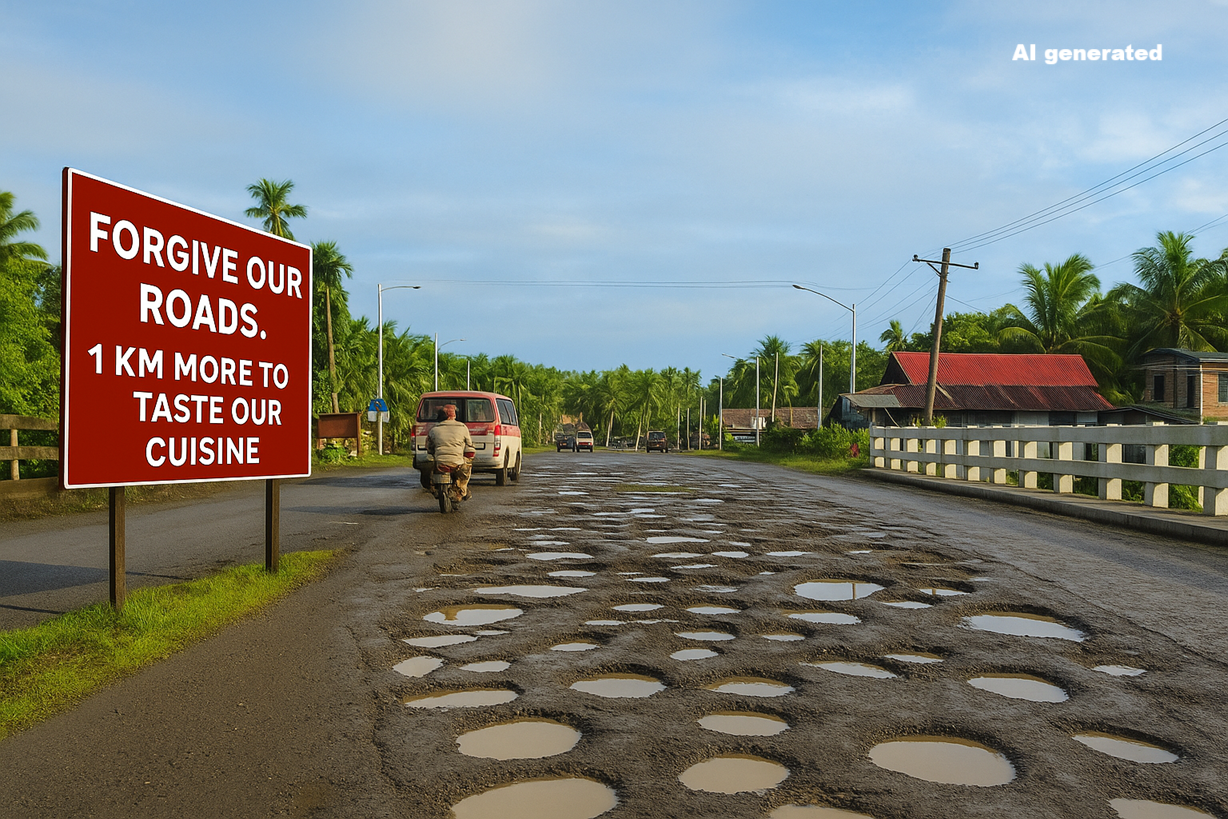
In cash-scarce communities like Samar Island, tourism must not be built as an expense for promotion alone—it must be an economic engine, carefully planned to create jobs, support producers, and bring external income into the local economy. The most effective tourism strategies in such settings begin not with festivals or marketing, but with investments in roads, bridges, airports, and seaports—the very infrastructure that connects communities to each other and to the world.
For food tourism, this is even more critical. The unique value of Secret Kitchens of Samar lies in its potential to offer visitors an immersive, place-based culinary experience—to taste Binagol in Calbiga Samar where the rootcrop and other ingredients are harvested, to try paksiw cooked in clay pots over firewood, to drink coco wine beside the tree it came from or taste adobong tahong or lumpia tahong in the green mussel farm of Jiabong. These are experiences that cannot be packaged in boxes or replicated in urban restaurants without losing their soul. But such authenticity is only accessible if infrastructure makes the journey possible.
If all these dishes are merely recreated in city-based pop-ups or served on silver platters at expos, the essence of Secret Kitchens is lost. Tourism stops being about discovery and connection, and becomes merely consumption. For Samar to benefit economically and culturally, visitors must travel—to the hills, the coastal kitchens, the river-fed gardens—where stories meet flavors. And for that, Samar must ensure that the physical roads match the narrative routes already drawn by the cookbook.
Moreover, the true economic benefit of tourism comes from external visitors, not just local consumers. When people from outside Samar visit, they bring in new money, spend on food, accommodations, transport, and crafts—injecting fresh capital into rural economies. In contrast, local tourism recycles money already within the province. To attract these outside markets, tourism infrastructure must be reliable, safe, and convenient.
Thus, before Samar can serve its dishes to the world, it must first serve access to its own communities. Roads are not just concrete—they are conduits to livelihood. Airports are not just terminals—they are gateways to culture. Seaports are not just docks—they are bridges between isolation and opportunity.
Food tourism can be Samar’s strength—but only if it is rooted in place and powered by access. Without this foundation, the promise of Secret Kitchens risks remaining in bookshelves rather than blossoming in communities.
III. Understanding the Gourmand Award
To chart a path forward, it is essential to first understand what the Gourmand World Cookbook Award represents. Founded in 1995 by Edouard Cointreau, the Gourmand Awards are often referred to as the “Oscars of the cookbook world.” Each year, hundreds of submissions from over 200 countries compete in various categories that celebrate the cultural, historical, and literary merits of food-related publications. The focus is squarely on how food is documented, narrated, and presented in print.
When Secret Kitchens of Samar won Best Book Series and Best Regional Book in the World, it was likely recognized for:
- The depth and authenticity of its cultural storytelling;
- The quality of its visual presentation (photography, design);
- Its ability to connect food to identity, place, and heritage.
For this award, the judges neither tasted the food nor evaluated culinary techniques or flavor profiles. It was not a competition of gastronomic excellence, but rather a celebration of culture and storytelling. The recognition was literary and cultural in nature—highlighting the heritage behind the dishes more than their taste or innovation. What the book succeeds in doing is sparking curiosity: the vivid photos and heartfelt stories hint at flavors that deserve to be experienced firsthand. This is the true invitation—to entice tourists to come and immerse themselves in Samar’s culinary landscape, where the real taste of tradition awaits.
This distinction matters. The award affirms Samar's cultural richness, but not necessarily its culinary competitiveness on the global stage. The recognition is an invaluable opportunity for cultural diplomacy, regional branding, and national pride—but it does not automatically drive tourism, nor does it assure that Waray dishes will rise in global popularity based on taste alone.
Understanding the boundaries of this recognition is vital to ensure that the next steps build upon the book's success in meaningful, sustainable, and taste-driven ways.
IV. The Missed Opportunity in Taste Experience
While Secret Kitchens of Samar succeeds in preserving and showcasing the cultural soul of Waray cuisine, its greatest limitation lies in the very thing that makes food powerful: taste. A beautifully written book, no matter how evocative, cannot deliver the sensory experience of a freshly grilled or kinilaw na tangigue, the subtle sourness of kinilaw nga isda, or the smoky richness of tinapa cooked in firewood kitchens. This is where the gap lies—and where the opportunity begins.
In today’s world, food is increasingly portable and accessible. Regional delicacies once found only in small provinces can now be ordered online, bought in supermarkets, or recreated using YouTube tutorials. Recipes are no longer bound by geography. This democratization of food, while exciting, also dilutes the need to travel to a place to experience its cuisine.
This raises a critical issue for Samar: if Waray dishes can
be read, copied, or even tasted elsewhere, what compels someone to travel to
the island? Without a place-based food experience, the cookbook
risks becoming a beautiful but static archive—praised abroad, yet disconnected
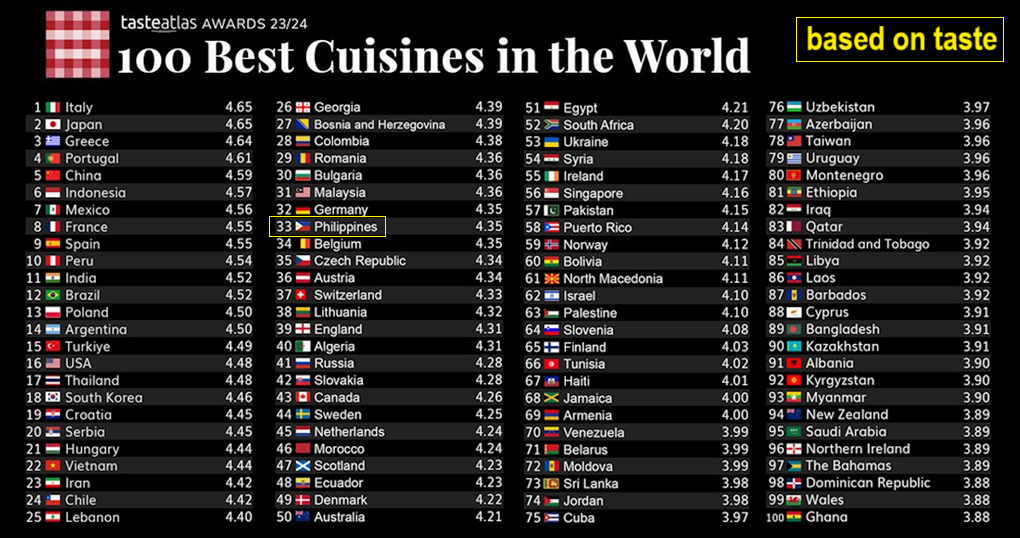
from local tourism impact or economic return for the featured communities. 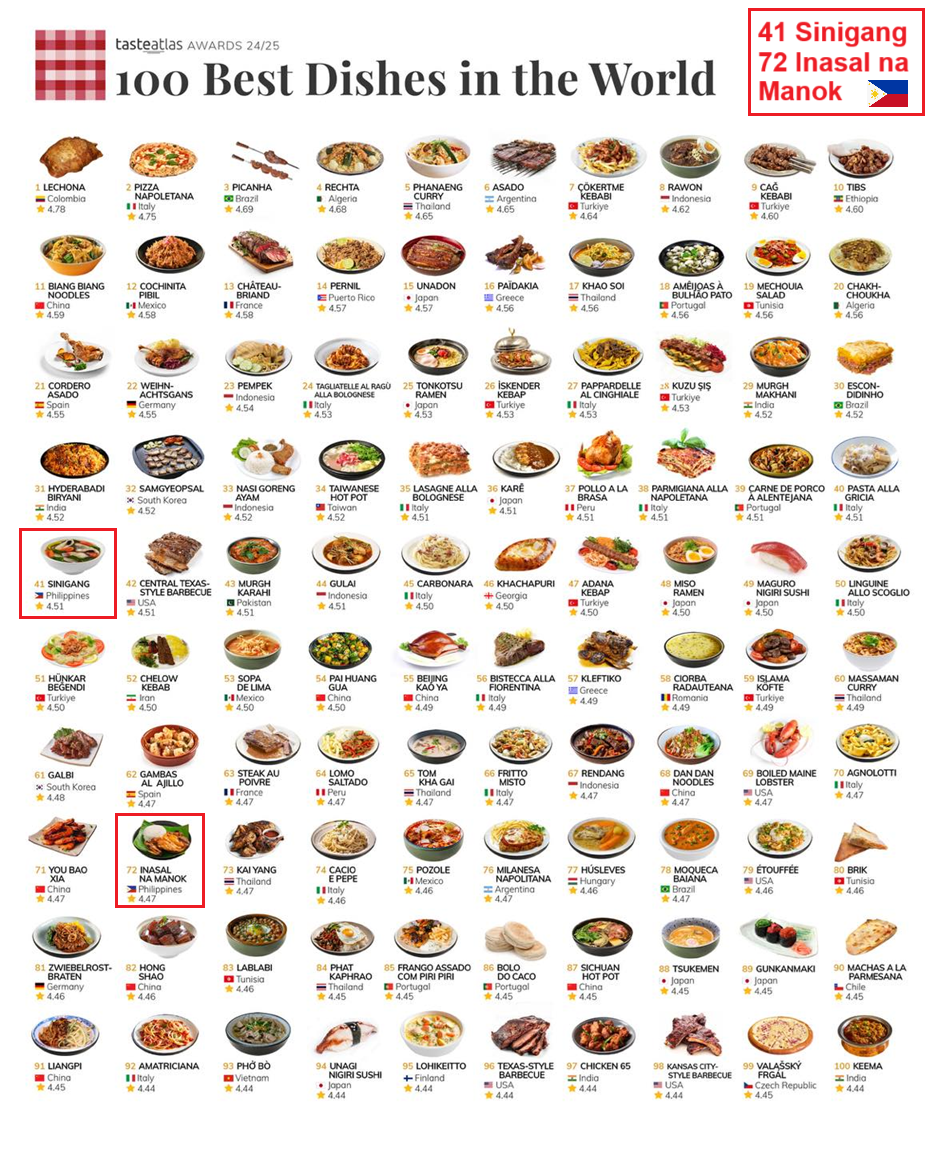 Further, Filipino cuisine as a whole faces the challenge of underdog
status in the global food scene as shown in the two pictures of best dishes and cuisines in the world according to taste atlas. Despite its rich history and flavors, it
often takes a back seat to its Asian neighbors. Dishes are criticized as too
brown, too salty, too sweet, or lacking visual appeal. Even as international
chefs and influencers begin to spotlight Filipino food, the movement is
fragile, and regional cuisines like that of Samar remain underrepresented. The award recently received is an opportunity to be noticed and tasted. Will this food listed in the cookbook be able to enter the taste atlas best dishes?
Further, Filipino cuisine as a whole faces the challenge of underdog
status in the global food scene as shown in the two pictures of best dishes and cuisines in the world according to taste atlas. Despite its rich history and flavors, it
often takes a back seat to its Asian neighbors. Dishes are criticized as too
brown, too salty, too sweet, or lacking visual appeal. Even as international
chefs and influencers begin to spotlight Filipino food, the movement is
fragile, and regional cuisines like that of Samar remain underrepresented. The award recently received is an opportunity to be noticed and tasted. Will this food listed in the cookbook be able to enter the taste atlas best dishes?
To bridge this gap, the culinary heritage captured in the Secret Kitchens of Samar must be tasted, experienced, and emotionally remembered—not just read about. The missed opportunity lies in the absence of a structured platform that translates cultural memory into culinary reality. Without this, the cookbook’s impact risks being limited to awards and applause, rather than real economic uplift or increased tourism.
V. Making the Jump – From Cultural Value to Culinary Destination
The success of Secret Kitchens of Samar as a cultural artifact creates a powerful opening—but to convert that momentum into real-world impact, Samar must make a decisive leap: from narrative to experience, from pages to plates. This means moving beyond documentation to designing spaces and systems where people can actually taste the heritage being celebrated.
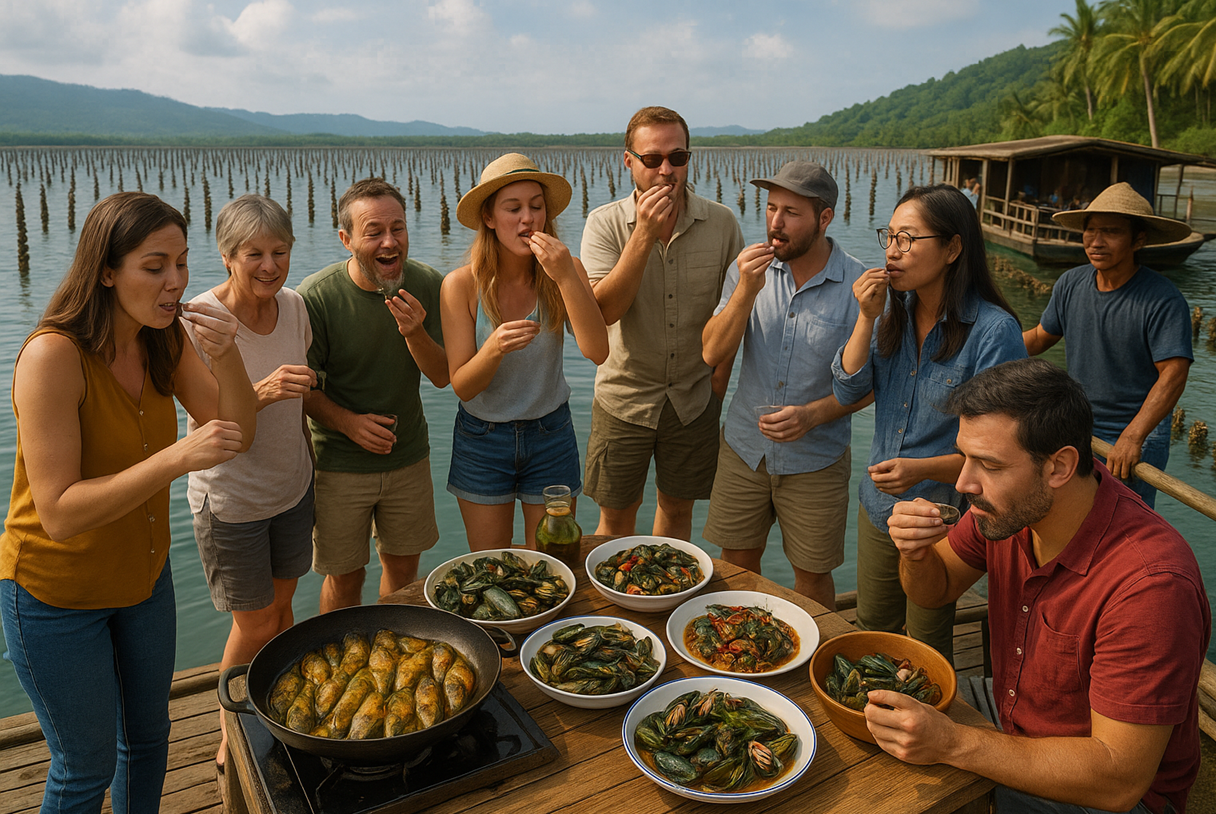
The most immediate way to achieve this is by establishing a physical “Secret Kitchen Experience Center”—a curated venue or series of venues across Samar where all the featured dishes from the cookbook can be cooked, served, and enjoyed by locals and visitors alike. This would not be just a restaurant, but a living museum, a culinary storytelling space, and a training hub where Waray home cooks, farmers, and artisans share not only food but also stories, rituals, and craft. Think of it as a cross between a heritage kitchen, cultural café, and interactive food tour. This is a tricky part as the stories need to be genuine, the age of AI can easily reveal if the story is true or not like if it's really unique food or a variant of the same food elsewhere.
In addition to a fixed center, a “Secret Kitchen Trail” could link key municipalities featured in the book. Visitors would journey through communities to taste each signature dish in its place of origin—guided by local families and enriched by cultural performances, indigenous crafts, and storytelling sessions. This makes the food inseparable from the place, turning Samar’s geographical isolation into a unique selling point.
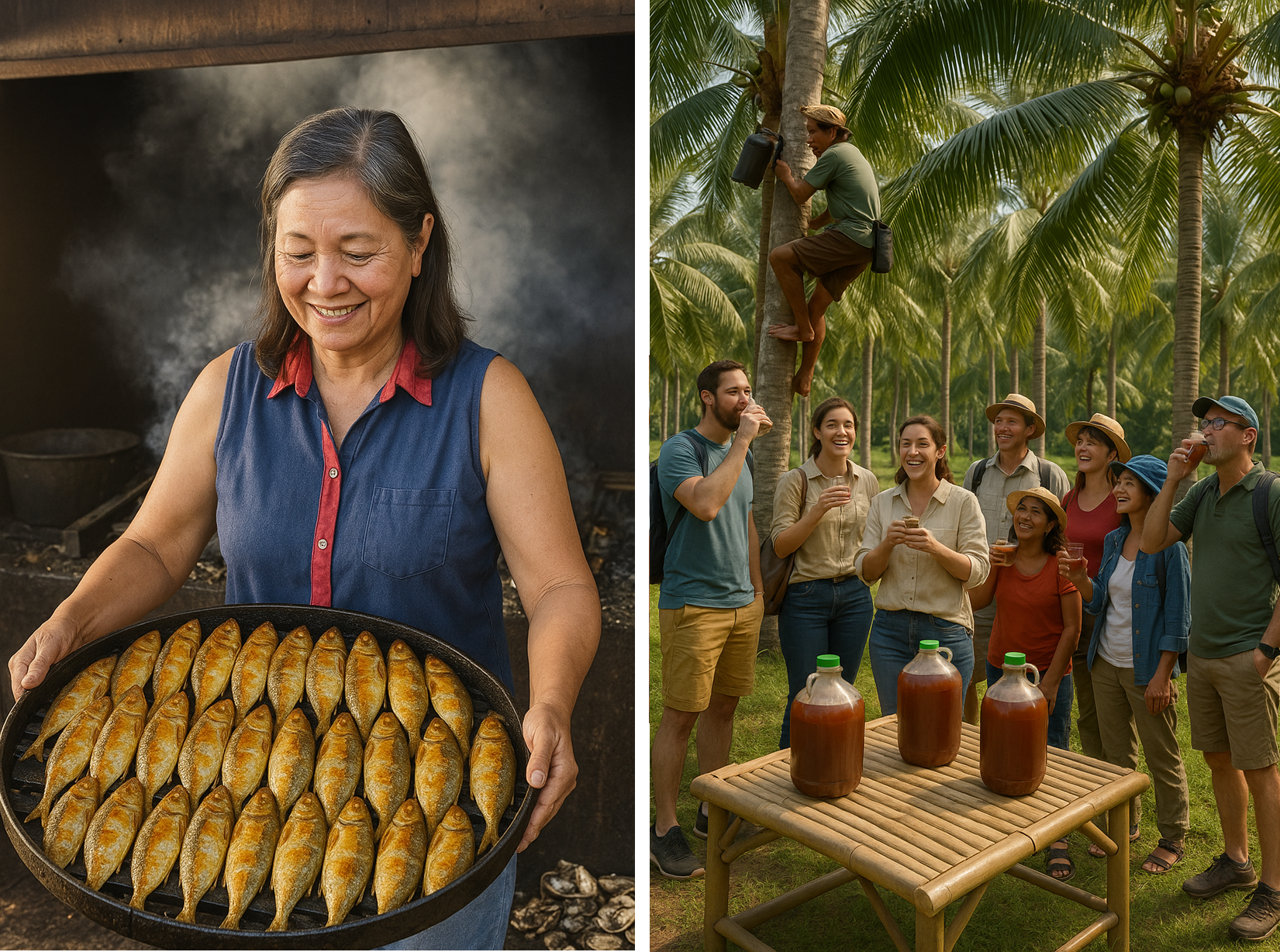
Internationally, countries like Thailand and Vietnam have transformed rural, once-ignored towns into tourism magnets by capitalizing on immersive food experiences—not just taste, but preparation, context, and ambiance. In the Philippines, examples like the or the Ilocos culinary trails show how food tourism can be hyper-local and still draw national attention.
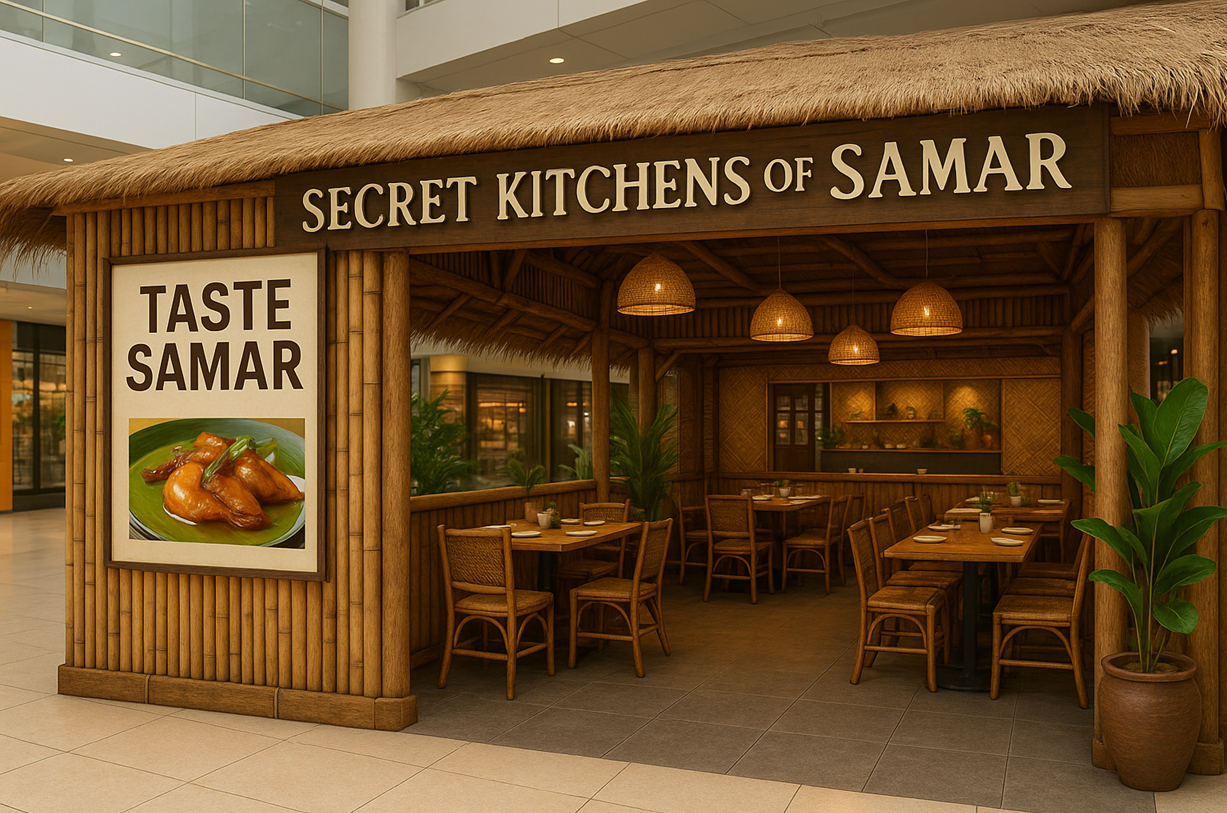
For Samar, the key is to shift from being known as “the subject of a global book” to being “a destination where that story comes alive.” Until that leap is made, Secret Kitchens of Samar remains a powerful but underutilized asset.
VI. Strategies for Global Taste Recognition
To fully capitalize on the cultural momentum of Secret Kitchens of Samar, Samar must now pursue strategies that position its cuisine not only as a heritage treasure but as a competitive culinary identity in the global arena. Taste recognition must move from implied to proven—where Waray dishes can stand beside celebrated Asian cuisines not just as curiosities, but as compelling, flavorful experiences worth seeking out.
Here are five actionable strategies to elevate Samar’s food from book pages to global plates:
1. Train and Professionalize Waray Culinary Ambassadors
Home cooks featured in the book are the heart of Samar’s food heritage. They must now be trained and supported to:
- Conduct live cooking demos at local and international events.
- Host structured food experiences in their communities or mobile kitchens.
- Collaborate with culinary schools to teach and innovate Waray cuisine while retaining authenticity.
Creating a cadre of Waray Culinary Ambassadors helps ensure that the recipes evolve into respected food practices, not just text.
2. Compete in National and International Food Expositions
Samar can represent the Philippines in food expos, chef competitions, or tourism showcases:
- Bring signature dishes like tamalos, tuba ice cream, coco-wine, or sea grapes wine to taste-based judging platforms.
- Partner with chefs to reimagine plating and presentation without altering core ingredients.
- Use food fairs not just to sell, but to create buzz and curiosity.
Winning—or even placing—in these venues enhances perception and builds credibility in the global culinary map.
3. Develop a “Waray Heritage Dish” Certification
A seal of authenticity or a geographical indicator-style label can:
- Promote traceability and provenance.
- Help protect recipes from commercial exploitation without benefit-sharing.
- Elevate the identity of dishes like tamalos or adobo sa gata as distinct regional specialties.
Over time, this can work like Italy’s DOP labels or Thailand’s GI foods.
4. Collaborate with Restaurants in Urban Centers and Abroad
Partnering with high-end or cultural restaurants in Manila, Cebu, Davao, and even Filipino communities abroad could allow:
- “Secret Kitchen of Samar” pop-up menus for limited periods.
- Chef exchanges and residencies.
- Co-branded product launches, e.g., sauces, condiments, or frozen versions.
This introduces the flavors to larger audiences who may later be enticed to travel to Samar.
5. Use Food Media to Shape Global Palate Memory
Stories alone are not enough—taste memories need to be formed:
- Host international food vloggers, YouTubers, or Netflix-featured chefs.
- Create short films or mini-documentaries on the cultural and emotional significance of Samar’s dishes.
- Develop TikTok/Instagram campaigns tied to festivals and eating rituals.
Without media coverage, even the most delicious food can go unnoticed. With it, Waray dishes can become symbols of pride and attraction.
Together, these strategies do more than promote taste—they shape perception, desirability, and identity. Samar’s food doesn’t just need to be known—it needs to be wanted, tasted, and remembered.
VII. Policy and Tourism Integration
For Secret Kitchens of Samar to evolve from an acclaimed publication into a sustainable engine for economic growth and tourism, it must be anchored within an integrated policy and development framework. Good intentions and isolated events are not enough. The success of this transformation depends on the alignment of local government, national agencies, tourism planners, and the private sector.
1. Formal Inclusion in the Regional and Provincial Tourism Master Plan
- The Secret Kitchens of Samar which is positioned as a flagship cultural tourism activity be present in a comprehensive tourism master plans of the Province of Samar and Region VIII.
- This includes:
- Allocation of budget for infrastructure (e.g., heritage kitchens, culinary trails).
- Training programs for local guides and cooks.
- Promotion in DOT’s “Love the Philippines” campaigns and in international expos.
2. Cross-Agency Collaboration
|
Agency |
Role |
|
DOT |
Product development, tourism marketing, training |
|
DTI |
Support for food packaging, MSME development, GI labeling |
|
DA |
Linkage of farmers and fisherfolk to culinary supply chains |
|
DepEd/CHED |
Curriculum integration on local food heritage |
|
NCIP & NCCA |
Cultural safeguards and IP recognition for indigenous knowledge |
|
TESDA |
Certification of Waray culinary practitioners |
Without coordination, the initiative risks being reduced to a photo-op or one-time event.
3. Establishment of the Secret Kitchens Experience Center
The Provincial Government, in partnership with the private sector, can establish a public-private model to operate a Secret Kitchens Hub—as:
- A living food museum
- A training space for cultural cuisine
- A tourism gateway for culinary and cultural trails
This hub could be located in a heritage house in Catbalogan or Calbayog, tied to a culinary route through various municipalities.
4. Funding, Investment, and Grant Mechanisms
- Allocate LGU funds through the Provincial Development Fund or 20% IRA for tourism infra.
- Seek support from:
- Tourism Promotions Board (TPB)
- UNESCO or ASEAN cultural preservation grants
- Private CSR or ESG-driven investment
Providing initial capital support ensures that Secret Kitchens is not just symbolic, but economically functional.
5. Monitoring and Impact Assessment
Create an M&E framework to track:
- Visitor arrivals linked to food tourism
- Income growth of featured households and communities
- Branding and reach of Samar cuisine nationally and internationally
These metrics build the case for scaling and justify future support.
A whole-of-government, whole-of-community approach is essential. The book has opened the door. Now, policies must walk through it—turning literary prestige into livelihoods, pride, and sustainable cultural tourism.
VIII. Conclusion
The international acclaim received by Secret Kitchens of Samar is more than a literary milestone—it is a strategic opening. It places Samar on the global map, not merely as a source of culinary narratives, but as a potential destination for authentic, community-rooted tourism. Yet recognition alone does not translate to development. The task now is to build the pathways—both literal and figurative—that connect cultural pride with economic opportunity.
Food tourism, when grounded in place, people, and memory, can offer not only flavor but livelihood. But this vision demands investment in enabling conditions: roads that lead to remote kitchens, bridges that link communities to opportunity, and tourism infrastructure that invites visitors not just to taste, but to stay, learn, and return. Without access, experience remains distant; without policy, potential stays dormant.
To truly honor the spirit of Secret Kitchens of Samar, we must ensure that its recipes are not only read but shared in the communities that gave birth to them. We must build a future where culinary heritage is not just preserved in print, but tasted in its place of origin—where food becomes a vehicle for inclusive growth, cultural pride becomes economic resilience, and Samar’s stories find their fullest expression not only in awards, but in the lives of its people.
This is not simply a matter of tourism development. It is a vision for socio-economic transformation, rooted in authenticity, driven by local enterprise, and sustained by strategic planning. The book has opened the door. Now is the time to walk through it—deliberately, collectively, and with purpose.